
每日签到,免费领 15 积分 · 每天都能领,当天有效,UTC 00:00 清零。
Wan 3.0 AI 视频生成器
用提示词或首帧、尾帧生成带声音的 Wan 3.0 视频。AgentReel 在浏览器里替你运行 Alibaba 的 Wan 3.0,五种画面比例、三档分辨率,每条视频生成前都会显示积分价格。
- 时长:5s、10s、15s
- 分辨率:480p、720p、1080p
- 画面比例:16:9、9:16、1:1、4:3、3:4
- 每条 10–120 积分
最后更新
在 AgentReel 上生成的示例片段
来自作品展示的真实生成结果,附带生成时使用的提示词。
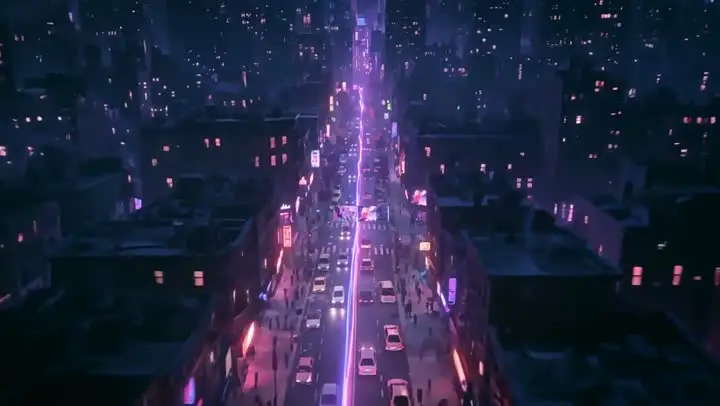
Midnight chase
提示词: Generate an approximately 30-second, 16:9 horizontal high-aesthetic urban MG chase short film. Image1 @Image1 is used as the reference for the city space, neon atmosphere, road structure, and overall visual texture; Image2 @Image2 is the only reference for the male character appearance; Image3 @Image3 is the only reference for the female character appearance. Strictly maintain the consistency of both characters' faces, hairstyles, body shapes, clothing structures, color palettes, and visual identity. 【Overall Style】 High-end motion graphics dynamic illustration style, combining flat MG graphic language, refined 2.5D spatial layering, and restrained 3D volume. The overall style should not be a realistic live-action film, not childish cartoon style, and not messy heavy industrial cyberpunk. The atmosphere should be stylish, cool, beautiful, tense, and eye-catching, like an action-movie-level urban chase promotional short film. The camera language should heavily use handheld tracking shots, rapid whip pans, snap zooms, low-angle ground-level shots, backward tracking shots, whip transitions, and occasional drone wide shots, creating a strong sense of pursuit pressure. 【Character Action Logic】 The female character's advantage is lightness, speed, agility, and using the environment and route changes to escape. The male character's advantage is strength, prediction, pressure, and interception ability. Both characters are martial arts experts, so the confrontation should not be chaotic grabbing, but a battle around the glowing ball involving "grabbing, blocking, redirecting force, switching hands, using momentum, turning, dodging, and counterattacking." The female character often uses turning movements, force redirection, route changes, and environmental obstacles to create distance; the male character often uses early positioning, wrist interception, body blocking, route sealing, and close-range suppression. 【Glowing Ball】 The glowing ball can be held in one hand, with a white core and soft purple-pink-blue halo. It is the only target being fought over throughout the entire film. The glowing ball should realistically illuminate the hands, facial edges, clothing, and surrounding environment. There is always only one glowing ball. Its size remains consistent. It never duplicates, disappears, or deforms. During movement, it only creates short, clean light trails. 【0.0-4.0 seconds | City traversal and female character introduction】 The camera begins with a high-speed flight through a city nightscape, passing through skyscrapers, neon signs, and road lights, then diving along the main road into the urban district, crossing traffic, and rapidly lowering to street level. As the camera suddenly stops, the female character rushes into frame from the side, tightly holding the glowing ball. First show a series of fast close-up shots: footsteps, the hand gripping the ball, her backward glance, and her forward-running upper-body posture. She is not casually running; she is clearly escaping, quickly observing both the route ahead and behind her, showing that she knows someone is chasing her. 【4.0-8.0 seconds | Male interception, first close-range confrontation】 When the female character enters a narrow street passage, the male character cuts in from another route ahead, showing that he is not blindly chasing but predicting and intercepting. After seeing the male character, the female character does not stop immediately. Instead, she attempts to diagonally change direction and bypass him. The male character immediately reaches out and grabs the wrist holding the glowing ball, with the clear goal of taking the ball. The female character instantly pulls her arm back to protect the ball, while using the pulling force to rotate her body around the outside of his grabbing hand, creating the first force-redirection movement. The male character immediately switches his other hand toward the ball route and uses his shoulder to block her escape path. The female character lowers her center of gravity, slides underneath his arm, and before escaping position, lightly blocks his chest with her forearm to create half a step of space. The male character catches up again and briefly touches the ball but fails to secure it. The camera stays close to both characters, using handheld close-ups, rapid zooms, and small circular movements, always focusing around the glowing ball and hand movements. Finally, the female character performs a fast turn to escape the male character and continues running forward. 【8.0-13.0 seconds | Entering the crowd, female character uses the environment】 The female character rushes into a crowded area. She does not run randomly, but intentionally chooses a complex environment because she is more agile than the male character. She first moves sideways between two pedestrians, then uses roadside stalls and railings to quickly change direction, making it difficult for the male character to approach directly. The male character continues chasing through the crowd without slowing down, occasionally pushing through shoulders to create pressure. The camera mainly uses wide-angle handheld close-follow shots. The frame can be briefly blocked by pedestrians, creating a realistic chaotic feeling. At one point, the male character grabs the back of the female character's coat. The female character does not pull backward forcefully. Instead, she uses the pulling force to rotate sideways, redirects the force, then uses her elbow to push away his forearm before slipping past his side. The two have their second close confrontation inside the crowd: the male character grabs the female character's forearm with one hand and reaches for the glowing ball with the other. The female character raises the ball-holding hand to avoid the grab, locks his wrist with her other hand, rotates her body in the opposite direction, and uses momentum to pull him slightly off balance. The female character slips away from his side and escapes again. 【13.0-16.5 seconds | Entering traffic, switching to bicycles】 After escaping the crowd, the female character reaches the edge of the main road. She realizes continuing on foot will allow the male character to catch up, so she immediately changes transportation. She grabs the handlebar of a bicycle parked nearby and uses her forward momentum to jump onto it, immediately beginning to ride without stopping. The male character exits moments later, quickly grabs another bicycle and continues the pursuit. Use a brief wide shot to establish the space: city skyscrapers, main roads, traffic flow, and both characters' routes. Then immediately return to a low-angle perspective and enter a high-speed bicycle chase. 【16.5-24.0 seconds | Bicycle chase through traffic and third confrontation】 The female character's cycling route is more flexible. She rides close to cars, changes lanes, leans the bicycle, and cuts diagonally through traffic gaps to create distance. The male character's route is more direct and aggressive, constantly reducing the straight-line distance. The camera alternates between ground-level tracking shots, backward tracking shots, high-speed side movements, and brief aerial perspectives. The traffic should react realistically to the chase: when the characters pass near car fronts, vehicles brake suddenly, lights turn on, horns sound, and drivers slightly avoid them, creating a sense of danger. During the bicycle chase, the male character first reaches side-by-side and reaches for the glowing ball. The female character does not immediately pull away. Instead, she intentionally keeps the ball slightly outward for half a beat, causing the male character to extend his body further. When his balance shifts, the female character suddenly leans the bicycle and changes direction, causing him to miss. During the second approach, the male character becomes smarter. He uses a slowing vehicle to block the female character's escape route, then approaches from the side rear and almost grabs her wrist holding the ball. This time the female character does not resist directly. She quickly switches the ball to the other hand, uses the bicycle handlebar for a half-turn movement, and slides away from the male character's reach. The two bicycles nearly collide. The camera should create strong speed and danger. 【24.0-27.5 seconds | Final pressure and female escape】 The traffic becomes more complicated at the intersection ahead. The male character uses his straight-line speed advantage again and nearly reaches the female character's shoulder from behind. The female character notices a large bus crossing horizontally and a line of suddenly stopping vehicles, instantly recognizing an escape opportunity. She intentionally maintains her original route to keep the male character locked onto her position. When he gets close, she suddenly leans the bicycle and cuts through the narrow gap between the front of a braking car and the bus. The male character reacts slightly slower and is forced to slow down and detour because of the angle between the car and bus. The camera quickly pans and becomes completely blocked by the side of the bus, creating a natural transition. 【27.5-30.0 seconds | Ending】 After the bus passes, the male character rushes out but discovers that the female character has already created distance. In the distant neon street corner, only a rapidly moving glowing ball remains visible. The camera quickly pushes toward the distance. The female character briefly looks back in the deeper neon street, showing a slightly proud and relaxed expression, then continues riding away with the glowing ball. Finally, the camera slowly rises and pulls away, revealing the busy night city, continuous traffic flow, and the disappearing light point in the distance. The female character successfully escapes. 【Camera Movement Requirements】 70% of the entire film should have handheld camera feeling. Do not make it overly stabilized. Close-range confrontation scenes should mainly use handheld shots, rapid push-ins and pull-outs, and small circular movements. Crowd chase scenes should strengthen obstruction, blocking, and breathing rhythm. Traffic chase scenes should emphasize low-angle shots, opposing movement, rapid zooms, and sudden braking atmosphere. Wide shots are only used to establish space and provide pacing breaks. The camera should always serve the ownership of the glowing ball, the distance between the two characters, and the direction of pursuit. Do not add meaningless flashy rotations.
参数与限制
直接读取 AgentReel 的模型目录,因此这张表始终与生成器保持一致。
| 开发方 | Alibaba |
|---|---|
| 类型 | AI 视频模型 |
| 输入 | 文字提示词,或最多 2 张参考图 |
| 提示词长度 | 最多 20,000 个字符 |
| 画面比例 | 16:9, 9:16, 1:1, 4:3, 3:4 |
| 分辨率 | 480p, 720p, 1080p |
| 时长 | 5s, 10s, 15s |
| 积分 | 每次生成 10–120 积分 |
各项设置的积分价格
每一种参数组合的积分消耗。点击生成前,按钮上总会显示准确价格。
| 分辨率 | 时长 | 文字提示词 |
|---|---|---|
| 480p | 5s | 10 |
| 480p | 10s | 20 |
| 480p | 15s | 30 |
| 720p | 5s | 20 |
| 720p | 10s | 40 |
| 720p | 15s | 60 |
| 1080p | 5s | 40 |
| 1080p | 10s | 80 |
| 1080p | 15s | 120 |
与其他AI 视频模型对比
同一生成器中的全部模型,含开发方与积分区间。价格与生成器读取的是同一份模型目录。
| 模型 | 开发方 | 积分 |
|---|---|---|
| Veo 3.1专业 | 8–93 | |
| Seedance 2.5新 | ByteDance | 35–593 |
| Kling 3.0热门 | Kuaishou | 11–102 |
| Kling 3.0 Omni | Kuaishou | 18–87 |
| Gemini Omni Video | 16–53 | |
| Gemini Omni 1.1 Flash新 | 16–53 | |
| Seedance 2.0 | ByteDance | 24–383 |
| Wan 3.0 (当前页面)新 | Alibaba | 10–120 |
| Runway | Runway | 3–8 |
| MiniMax H3 | MiniMax | 12–49 |
| Hailuo 2.3 | MiniMax | 8–23 |
| Wan 3.0 Prime | Alibaba | 16–189 |
| Kling 3.0 Turbo快速 | Kuaishou | 23–85 |
| Seedance 2.0 Fast快速 | ByteDance | 15–93 |
| PixVerse V6 | PixVerse | 7–69 |
| HappyHorse 1.1 | HappyHorse | 29–109 |
| Vidu Q4 | Vidu | 9–77 |
| Wan 2.7 | Alibaba | 20–90 |
| Grok Imagine Video 1.5 | xAI | 4–17 |
| Grok Imagine Video快速 | xAI | 4–30 |
自带声音,按秒计费
在 AgentReel 上,每条 Wan 3.0 视频都带音频,价格是分辨率对应的每秒单价。在每种分辨率下,Wan 3.0 的单价都低于两个 Seedance 模型,你能以更低的每秒成本得到声音、首尾帧和长提示词。
五种画面比例
可选 16:9、9:16、1:1、4:3、3:4。覆盖 YouTube 和网站、Shorts、Reels 和抖音、方形信息流帖子,以及演示文稿、人像镜头和部分广告位常用的 4:3 与 3:4。
首帧和尾帧
上传一张图固定开场画面,或上传 2 张图同时固定开场和结尾,Wan 3.0 会补出两者之间的运动轨迹。使用首尾帧时,视频会适配图片的形状。
容得下细致的提示词
提示词最长可达 20,000 个字符,足够写下精确的镜头描述、品牌规范或视频必须出现的元素清单。镜头需要多少就写多少,不必更多。
如何生成 Wan 3.0 视频
描述镜头
写好提示词,可以再上传首帧,或首帧加尾帧。
选择设置并生成
选择比例、分辨率(480p、720p、1080p)和时长(5s、10s、15s),生成按钮会显示准确价格。
适合做什么
Wan 3.0 指南:提示词、首尾帧与费用
提示词写法
用直白、具体的语言描述一个镜头:主体、动作、地点、镜头和声音。「黄金时刻,一位骑行者穿过狭窄的石板街,镜头在一旁跟拍,远处传来教堂钟声」,一句话就给了 Wan 3.0 所需的一切。
最重要的内容放在前面,只保留一个主要动作。如果一段视频需要开头、中间和结尾,就生成三个镜头,再到 AI 视频编辑器里拼接,或者让视频智能体规划并生成整组镜头。
镜头语言很有帮助:特写、远景、缓慢推近、向左摇、手持、俯拍。氛围词最好描述看得见的东西,比如雾、霓虹灯光或长长的影子,而不是一种感觉。
首尾帧用法
首帧决定主体、构图和色彩。尾帧给视频一个终点,Wan 3.0 补出中间的运动。两张图形状相同,主体位置大致不变,并在提示词里描述动作。
如果图片太小或背景杂乱,先用免费图片工具处理,比如抠图或图片放大。
首尾帧也是让新视频衔接已有素材最简单的方法。从上一个镜头的结尾导出一张静帧,作为下一条视频的首帧,两个镜头之间的剪辑就会显得连贯,而不是突然跳到新场景。
分辨率、时长与价格
分辨率决定每秒单价,时长是乘数。480p 最便宜,最适合打草稿;720p 是默认值;1080p 最清晰。合理的流程是先用 480p 短时长打草稿,再用要发布的分辨率渲染定稿。
选能装下动作的最短时长。视频越长越贵,Wan 3.0 也越有可能偏离你的要求。
生成好的声音
音频由同一条提示词生成,所以把声音写在它所属的动作旁边:「她翻书时,雨点轻敲窗户」。一两个清晰的声源加上背景环境音,比一长串声音清单效果更好。
需要旁白或授权音乐时,在 AI 视频编辑器里替换生成的音轨,或者用 AI 视频广告生成器生成带配音的完整视频。
多条视频保持一致
几条视频需要看起来像一个系列时,每条提示词都复用同样的光线、色彩和镜头风格词,只改主体和动作。每条视频都从风格统一的图片开始,比如在 AI 图片生成器里做的图,角色和产品就能保持一致。
渲染定稿前,把草稿放在一起对比。在 480p 下修改提示词,比用 1080p 渲染完一整批才发现不一致要便宜得多。
竖屏和方形视频的构图
竖屏画面左右能展示的场景更少,所以描述更近的景别,把主体放在中间。上下方向的运动,比如从鞋子摇到脸部,或者无人机上升镜头,能充分利用竖长画面;大范围横摇则不行。
方形视频会和照片一起出现在信息流里,背景简单、主体清晰的画面在小尺寸下最容易看清。如果打算加字幕,在提示词里要求留出画面顶部或底部的空间,例如「主体位于画面上半部分」。
每种格式单独生成,而不是裁切一条宽屏视频。这样 Wan 3.0 会按你选择的画幅构图,重要内容不会在边缘被裁掉。
一条视频要多少积分
与其他模型对比
Wan 3.0 的输入方式和 Seedance 2.5、Seedance 2.0 相同:首尾帧、声音、三档分辨率和长提示词。在每种分辨率下,Wan 3.0 每秒都比这两个模型便宜,而 Seedance 多一种 21:9 画面比例。
Veo 3.1 按条计费,最高 4K;Kling 3.0 有声音开关和更多时长选项;MiniMax H3 最高 2K。它们都在同一个 AI 视频生成器里,模型总览 列出了全部模型和价格。